6 min read
Which materials suit a sustainable home in Austria?
By Lukas Gruber · · updated on
A single “green” product does not make a sustainable home. What matters is using materials that last, can be repaired and suit the local climate, such as wood, clay, lime and natural fibres.
Sustainability starts before the material itself
The key question is not, “Which material is the most ecological?” but rather, “What is appropriate for this place, this house and this use?” A period property in Graz needs different solutions from a timber house in the Bregenzerwald or a flat in Vienna. Sustainability is always shaped by context.
In Austria, the heating season, moisture, protection from summer heat and regional building traditions all matter. Materials should be able to buffer moisture, store warmth and age well, and ideally they should come from nearby. Long transport routes, complex composite materials and short-lived finishes often make the overall balance much worse.
It also helps to look at so-called embodied energy: the energy tied up in a material’s extraction, manufacture, transport, installation and disposal. A robust material that lasts for decades and can be repaired easily is often more sustainable than a fashionable alternative that has to be replaced quickly.
Wood: Austria’s classic material with modern strength
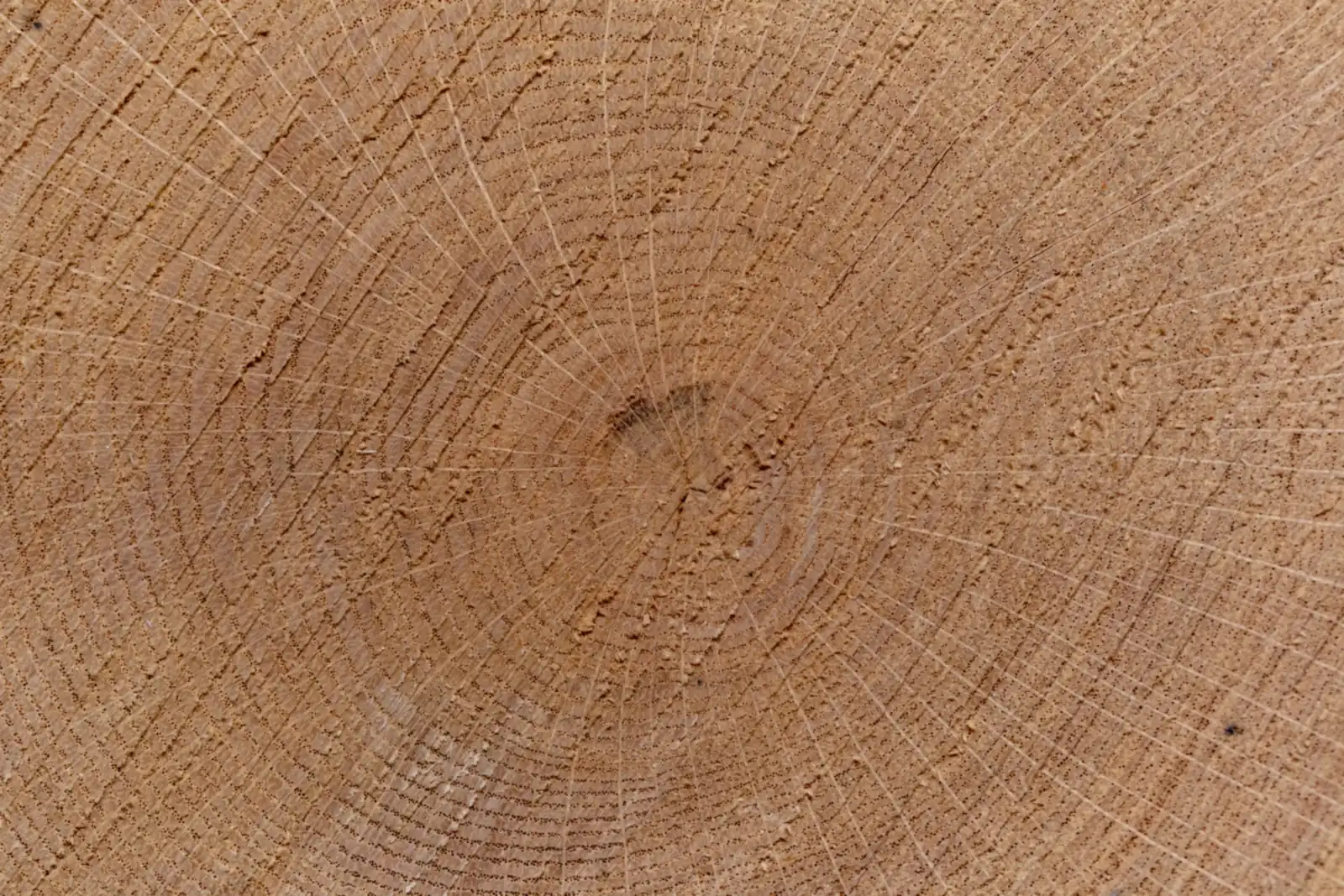
Wood is an obvious choice in Austria: it grows locally, stores carbon and has a warm, lived-in quality. It makes particular sense when it comes from sustainably managed forests and is properly protected by design, meaning it is planned so that it does not stay damp over time.
Wood is highly versatile for floors, windows, doors, furniture, wall cladding and structural elements. Local species such as spruce, fir, larch, oak, ash and beech all offer very different qualities. Larch, for example, works well for visible, hard-wearing applications, oak for durable floors and furniture, and spruce for structural elements.
What makes wood sustainable above all is quality and care. An oiled solid wood floor can be sanded, patched up and treated again. Veneered chipboard with difficult coatings, by contrast, is often far less repair-friendly. Choosing wood consciously also means choosing a way of building that allows for ageing and repair.
Natural stone, brick and mineral building materials
Natural stone feels durable, high-quality and rooted in the region. Austria has a long tradition of using stone for floors, steps, window sills and kitchen worktops. Natural stone is especially sustainable when it comes from regional or European sources, stays in use for a long time and is not installed simply as a short-lived trend.
Brick is just as firmly established in Austrian housing. It is durable, mineral-based and has strong building-physics properties. In renovations, it is often more sensible to keep existing brick walls and improve them intelligently for energy performance rather than replacing the fabric too quickly.
Concrete remains a mixed case: often structurally indispensable, but energy-intensive to produce. It becomes more sustainable where it is used sparingly, planned sensibly from a structural point of view, kept in use for a long time and separated as far as possible for reuse when dismantled. Exposed concrete should therefore serve a structural or functional purpose, not exist as a gesture on its own.
Insulation: keeping in warmth, saving resources
Insulation is central in Austrian homes, both against winter cold and, increasingly, summer heat. Sustainable insulation materials have to suit the construction in building-physics terms. The wrong insulation can cause moisture damage, even if the material itself looks attractive from an environmental point of view.
Wood fibre, cellulose, hemp, flax, sheep’s wool, cork and straw are natural insulation materials with different strengths. Wood fibre often performs well for summer heat protection, cellulose suits blown insulation, hemp and flax are versatile, cork is less sensitive to moisture but can involve more transport depending on its origin. Sheep’s wool can buffer moisture, but it needs a clean source and proper treatment.
When choosing, it is worth checking independent information, such as klimaaktiv, Austria’s climate protection initiative. It offers guidance for builders and renovators on energy-efficient building, renovation and living.
Surfaces: what you touch every day matters most
Floors, paints, varnishes and furniture finishes also affect indoor air. Sustainable rooms do not smell of solvents or feel sealed off. That is why low-emission products, mineral paints, natural oils and waxes are more than minor details. We look at this in more depth in the article “What defines modern Austrian interior style? Features, colours and furnishing ideas”.
For floors, solid wood, high-quality parquet, natural stone, terracotta, cork and linoleum are all interesting options. Real linoleum is made primarily from natural raw materials such as linseed oil, resins, wood or cork flour and jute fabric. It should not be confused with PVC flooring, and if the quality is good it can be very durable.
For wall paints, lime, silicate and clay paints are often good alternatives to heavily plastic-based coatings. The substrate is the decisive factor, though. A vapour-open paint applied over a dense old coating can only show its advantages to a limited extent. Sustainable design therefore starts with a careful assessment of what is already there.
Furniture and fitted pieces: less, better, repairable
A sustainable home has fewer things, and they are worth keeping. Made-to-measure fitted pieces in durable materials can make ecological sense if they are planned flexibly: shelves that can be adjusted, kitchen fronts that can be swapped out, fittings that can still be bought later.
Second-hand furniture, antiques and restored pieces work especially well in Austrian homes, where old and new often meet. An old wooden table, freshly oiled, can have more character and a better overall footprint than a newly made piece using composite materials shipped from afar.
For upholstered furniture, natural textiles such as linen, wool or hemp, hard-wearing covers and replaceable components are worth considering. Sustainability also means a sofa can be reupholstered instead of being thrown away after a few years.
A simple guide to choosing for builders and residents
Anyone choosing materials can use a few clear criteria as a guide. They do not replace professional planning, but they do help you have more informed conversations with architects, tradespeople and suppliers.
- Check how local it is: Is the material, or a good alternative, available from Austria or nearby parts of Europe?
- Assess durability: Can the surface age well, be repaired, sanded, re-oiled or painted again?
- Ask for low-tox products: Pay particular attention to emissions in paints, adhesives, varnishes, board materials and textiles.
- Take building physics seriously: Insulation, moisture behaviour and vapour openness must suit the construction.
- Think about separability: Single-material products and detachable connections are usually better at dismantling stage than glued composite systems.
- Value what already exists: Keeping, repairing and repurposing is often more sustainable than buying new or building new.
Renovating is often more sustainable than building new
Especially in Austria, with its many high-quality existing buildings, renovation is both a cultural and ecological key. An old door, a terrazzo floor, a wooden staircase or a box window all store resources, even if they are often seen mainly as nostalgic details.
That does not mean everything has to be kept. But before replacing anything, it is worth asking: can it be upgraded, sealed, repaired or complemented? Box windows can often be improved, plank floors refurbished, fittings renewed and plaster repaired. The most sustainable building material is often the one already in place.
For deeper environmental information, Austria’s Environment Agency offers solid guidance on resources, climate and the circular economy. Sources like this make it easier to tell the difference between marketing claims and dependable information.
Materials worth looking at critically
No material is inherently bad in every case, but some choices deserve closer attention. Heavily glued composite boards, floor build-ups that are hard to separate, short-lived plastic surfaces or tropical woods without credible proof of origin rarely fit a genuinely sustainable approach to living.
And “natural” is not an automatic mark of quality. Natural stone from far-away regions, leather with unclear tanning methods or wool without traceable origins can all be problematic. On the other hand, a technical material can make perfect sense if it is durable, repairable and the best solution for a specific purpose. For more background, see “Save on heating costs in winter: simple home tips for Austrian households”.
The benchmark should never be ideology, but suitability. A sustainable home is neither austere nor perfect. It is well planned, tactile, durable and honest about its compromises.
Frequently asked questions
Which material is best for a sustainable home in Austria?
There is no single best material. For many uses, regional timber, clay, lime, brick, natural stone and natural insulation materials are very good options. What matters is that the material suits the building, the way it will be used and the building physics.
Are natural materials always more sustainable than artificial materials?
No. Natural materials can be very sustainable if their origin, processing and durability are right. But long transport routes, problematic extraction or a short lifespan can weaken their overall quality. Technical materials can also make sense if they are durable and functionally necessary.
What should I pay particular attention to when renovating an older building?
Older buildings need vapour-open, compatible materials and a careful moisture analysis. Layers that are too dense, the wrong insulation or overly aggressive interventions can cause damage. Lime, clay, timber and mineral systems are often a good fit, but they should be properly planned.
Which sustainable floor coverings are suitable for flats?
Solid wood, high-quality parquet, linoleum, cork, natural stone and ceramic finishes can all be good solutions. What matters is robust quality, low-emission adhesives or loose or mechanical installation, repairability and a surface that suits the level of wear.